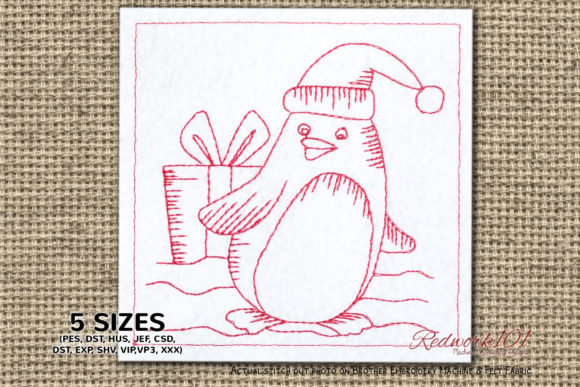
Christmas Penguin Redwork: A Designer’s Review
As an embroidery designer who regularly tests files for my personalized gift shop, I approach every new machine embroidery design with a critical eye. When preparing for the holiday rush, finding a motif that balances seasonal charm with commercial viability is essential. My latest test run was the Christmas Penguin Redwork, and I want to share my practical insights for fellow makers, Etsy sellers, and small business owners considering this design for their upcoming collections.
First Impressions: Charm Meets Versatility
The first thing that struck me about Christmas Penguin Redwork was its immediate emotional appeal. Redwork, by definition, relies on line work rather than dense fill stitches, which gives it a vintage, handmade aesthetic that customers adore. This particular penguin captures a sweet, playful mood without being overly juvenile. It feels classic enough for a traditional holiday mantle but modern enough for contemporary nursery decor.
From a production standpoint, the redwork style is a dream for high-volume stitching. Because it lacks heavy saturation, it stitches out quickly, keeping your machine running efficiently during peak season. The lines are clean and deliberate, suggesting a well-digitized embroidery file. However, as with any redwork design, the success of the final product depends entirely on your fabric choice and stabilizer setup. The design has a delicate elegance that can easily get lost on textured surfaces or overwhelmed by improper hooping.
Real-World Application: From Nursery to Kitchen
I tested this design across three distinct product categories to see how it performs as a personalized gift. Understanding where a design shines helps you target the right customer base and reduce wasted materials.
Baby Embroidery and Nursery Decor
For baby embroidery, this penguin is exceptional. I stitched it onto a soft cotton muslin blanket using a lightweight tear-away stabilizer. The low stitch density meant the fabric remained drapeable and soft against sensitive skin, which is a non-negotiable factor for parents. This design would also work beautifully on bibs, burp cloths, or crib sheets. Customers looking for gender-neutral nursery items are often drawn to animal motifs in red thread, making this a safe bet for baby shower gifts.
Kitchen Linens and Holiday Towels
I also tested the design on a flour sack towel intended as a hostess gift. Here, the optional box stitch mentioned in the product description became relevant. While the box adds structure, I found that skipping it allowed the penguin to feel more organic on the linen texture. As an embroidered towel, the redwork stood out crisply against the white fabric. This application is perfect for customers wanting affordable yet thoughtful stocking stuffers or kitchen accents.
Tote Bags and Pillow Covers
Finally, I applied the design to a canvas tote bag and a linen pillow cover. On the tote, the design served as a charming focal point for a reusable holiday shopping bag. For the pillow, the vintage vibe added warmth to a neutral living space. These items have higher perceived value than simple linens, allowing for better profit margins in your shop.
Navigating the Optional Box Stitch Feature
A unique aspect of this digital embroidery file is the optional outer box. The product notes specify that the box color differs in most designs unless it is integral to the art itself, and you can skip it directly. During my testing, I ran two versions: one with the box and one without.
- With the Box: Creates a framed, polished look ideal for standalone ornaments or square patches. It provides a boundary that helps with alignment on smaller hoops.
- Without the Box: Offers greater flexibility for combining with names, dates, or other monograms. If you are creating a custom family keepsake or adding personalization below the penguin, omitting the box prevents the design from feeling cramped.
Always check your specific hoop size before deciding. If you are working near the maximum dimensions of your hoop, removing the box might give you the extra millimeter needed to avoid registration issues.
Technical Considerations and Fabric Warnings
While Christmas Penguin Redwork is versatile, redwork is unforgiving on certain substrates. Through trial and error, I have identified where you should proceed with caution.
Avoid High-Pile Fabrics: Do not use this design on thick terry cloth or high-pile fleece without significant modification. The single running stitches will sink into the pile and disappear. If you must use plush fabrics, consider a knockdown stitch layer first, though this changes the nature of the redwork aesthetic.
Stretchy Knits Require Care: For baby onesies or stretchy apparel, you must use a cut-away stabilizer and potentially a fusible backing. Redwork has little structural integrity compared to satin stitch designs; if the fabric stretches after washing, the threads can snap or distort. Always advise customers to wash these handmade products gently.
Dark Fabrics and Contrast: Traditional redwork uses red thread on white fabric. If you plan to stitch this on dark green or navy holiday fabrics, test your thread colors first. White or cream thread can work, but ensure the contrast is sharp. Dark fabrics sometimes require an underlay to prevent the background color from bleeding through the single stitches.
Enhancing Giftability and Shop Value
For Etsy sellers and craft fair vendors, presentation is everything. This design photographs exceptionally well because of its graphic simplicity. When creating printable mockups or listing photos, the clean lines read clearly even in thumbnail sizes. This visual clarity increases buyer engagement and click-through rates.
Furthermore, the "handmade" quality of redwork builds trust. In a market saturated with shiny, dense machine embroidery, a redwork penguin signals artisanal care. It appeals to customers seeking meaningful, nostalgic items rather than mass-produced goods. Whether used for a wedding gift ornament commemorating a first Christmas as a couple or a family heirloom blanket, the design carries an emotional weight that justifies premium pricing.
Essential Pre-Production Checklist
Before listing any finished product featuring Christmas Penguin Redwork, run through this professional checklist to protect your reputation and minimize returns:
- Test on Scrap Fabric: Never stitch directly on a sellable item without a test run. Verify tension and registration.
- Verify Licensing: Confirm the commercial licensing terms for the embroidery file. Ensure you are permitted to sell finished physical products versus just the digital file.
- Check Small Details: After stitching, inspect the beak and feet. These small areas can pull tight or gap if the tension is off.
- Mockup Variations: Create listings showing both the boxed and unboxed versions so customers understand their customization options.
- Stabilizer Matching: Document which stabilizer worked best for each fabric type in your internal notes to streamline future production.
Final Thoughts for Makers
Christmas Penguin Redwork is a strong contender for any holiday embroidery lineup. Its blend of vintage charm and practical stitch economy makes it ideal for everything from quick-stock stuffers to cherished baby keepsakes. By respecting the technical limitations of redwork and leveraging its unique aesthetic, you can create custom embroidery that resonates deeply with holiday shoppers. Remember to always verify specific file details like stitch count and format compatibility with your machine before beginning, as these specs vary between digitizers. Happy stitching, and may your holiday season be filled with smooth runs and happy customers.